A creator brief that leaves room for ideas
Set the direction without writing every line. A practical outline for the work you need to agree before production.
Begin with the decision
A creator brief works best when it answers a practical question: what should a viewer understand or be able to do after this piece? “Build awareness” gives the creator little to work with. “Help a first-time buyer understand how the refill works” gives the work a subject.
Choose one primary audience and describe a situation they recognise. Add what they already know, the friction they face and the next step you want to make easier. This is a planning recommendation, not a formula for campaign performance.
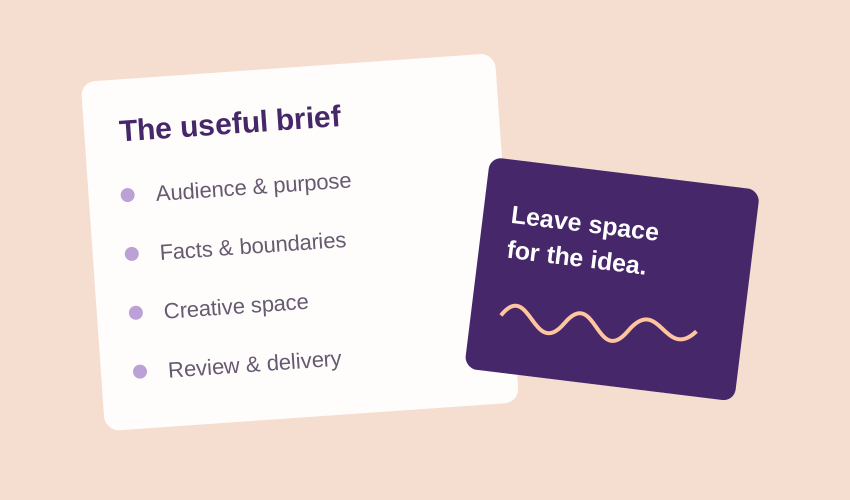
Use four useful sections
Audience and purpose
Write the audience, the problem and the desired next step in plain language. Include the landing page the audience will see. If the page cannot answer the question raised by the content, fix that mismatch before the creator starts.
Facts and boundaries
Supply a short, checked product fact sheet. Separate statements that are supported from claims that need more evidence. Name the product version, any limits on availability and the source of every factual comparison. Do not leave a creator to infer performance claims from a promotional deck.
Creative space
State what is fixed and what is open. A demonstration may need to show a particular safety step while the setting, opening and storytelling remain the creator's choice. Ask for a concept first when an expensive reshoot would otherwise be the first chance to discover a disagreement.
Review and delivery
Agree the format, number of deliverables, draft date, review owner and publication window. Record how many review rounds are included. Put usage permissions, paid promotion, editing permissions and duration in the agreement; a brief should refer to those terms rather than silently enlarge them.
Make disclosure part of production
For content that can affect US consumers, the FTC explains that a material brand connection should be obvious. Payments are not the only trigger: free products and other relationships can matter too. The disclosure belongs with the endorsement, where people can notice and understand it. A video disclosure should appear in the video, not only its description. See the FTC's Disclosures 101 for the US guidance and examples.
Reserve space in the concept and review checklist for the disclosure. Check requirements for the actual market and platform before publishing; this guide is a workflow aid, not a jurisdiction-specific legal review.
A short example to adapt
Audience: people choosing a notebook for a new course.
Useful idea: show how pages are replaced, using an actual sample.
Fixed: accurate product name, the real replacement process, clear sponsorship disclosure and a checked product-page link.
Open: the creator's setting, opening question, pacing and personal observations after trying the sample.
Review: one named reviewer checks facts and agreed deliverables. Creative feedback refers back to the audience and purpose.
This example is fictional. It describes no real product, client or completed partnership. Its purpose is to show where an instruction belongs, not to supply a finished advertisement.
Run the last review backwards
Start at the viewer's destination and work back through the link, call to action, content and opening. Can a viewer find the promised information? Does the draft distinguish the creator's experience from a product claim? Is the disclosure readable in the actual format? Has the agreed owner approved the correct version?
Save the approved brief and final creative together. When results arrive, you can compare them with the question the campaign was meant to answer rather than inventing a new objective afterwards.
Source and scope
Primary reference checked 8 November 2026: US Federal Trade Commission, Disclosures 101 for Social Media Influencers. Brief structure and example are Joinion's editorial synthesis; no performance benchmark is claimed.